How to Choose Commercial Lighting Solutions for Business
Choosing Commercial Lighting Solutions is not simply a matter of selecting brighter fixtures. It is a business decision involving energy use, worker comfort, maintenance, safety, and long-term operating costs. The International Energy Agency reports that lighting represents approximately 15% of global electricity consumption. That figure makes every fixture worth examining.
ENERGY STAR states that certified LED products can use at least 75% less energy than incandescent lighting. They can also last up to 25 times longer. However, efficiency alone does not guarantee a successful installation. A warehouse may need uniform illumination across tall aisles. A retail store may require accurate color rendering for clothing and product displays. An office needs controlled glare near computer screens. Each setting demands a different specification.
The best decision begins with documented requirements. Review illuminance targets, color temperature, CRI, beam angle, controls, emergency provisions, and maintenance access. Compare the total cost of ownership, not only the purchase price. The U.S. Department of Energy and ENERGY STAR provide useful performance guidance, while IES recommendations and local building codes support safer design choices. DLC-listed products may also help businesses evaluate efficiency and rebate eligibility.
A cheaper fixture can become expensive. Frequent failures, poor dimming, or uncomfortable glare may reduce productivity and increase complaints. This is where many buying guides oversimplify the issue. A practical assessment should include a site survey, lighting measurements, warranty terms, and a realistic payback estimate. The perfect solution may not exist. Still, a measured, application-specific approach can produce better comfort, lower energy bills, and more dependable commercial performance.
Understanding Commercial Lighting Needs and Business Requirements
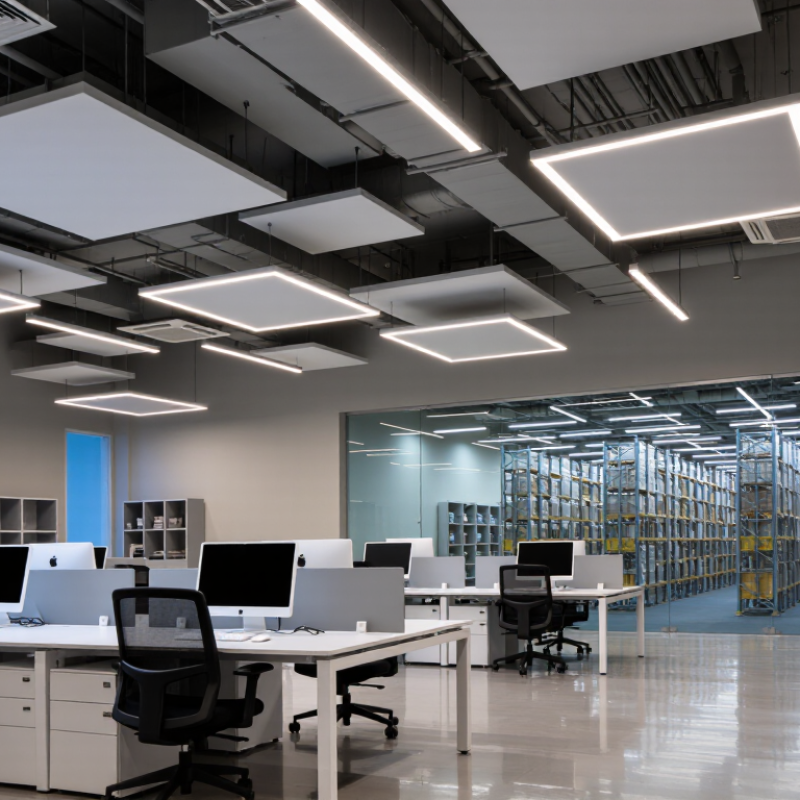
Choosing commercial lighting starts with the business, not the fixture. A warehouse needs clear aisles, impact resistance, and reliable visibility. A clinic needs low glare, accurate colour, and calm visual conditions. Retail spaces may require adjustable light for changing displays. Walk through the site at different hours. Note shadows, reflections, ceiling height, occupancy patterns, and maintenance access.
Energy performance also deserves careful measurement. The International Energy Agency’s Energy Efficiency 2023 report identifies lighting as responsible for roughly 15% of global electricity use. The U.S. Department of Energy’s 2023 Solid-State Lighting R&D Opportunities report discusses LED products exceeding 200 lumens per watt under controlled conditions. Real buildings rarely achieve laboratory results. Dust, poor optics, heat, and incorrect controls reduce performance.
Start with tasks and operating hours. Then define illuminance, colour rendering, glare limits, and control zones. Motion sensors may suit storage areas, but they can frustrate workers in frequently occupied rooms. Dimming can reduce waste, although poorly commissioned systems may create uneven light. That is easy to overlook. Use measured readings after installation, not only computer models. Keep a simple record of energy use and failed lamps. It reveals whether the design works in practice, and where the original assumptions need reconsideration.
Comparing Lighting Types, Technologies, and Performance
When choosing commercial lighting, compare more than brightness. Match each lighting type to the work, schedule, and room geometry. LED systems usually deliver strong energy efficiency, long service life, and flexible control. Fluorescent lighting can produce broad, even illumination, but its maintenance needs may increase over time. Halogen lamps offer accurate color, yet they create more heat and often consume more power.
Technology changes performance. Check luminous efficacy, color rendering, glare control, dimming range, and expected operating hours. A warehouse may need high-output fixtures with motion sensors. A retail space may need excellent color rendering for product accuracy. Offices often benefit from low-glare panels and daylight-responsive controls. Warm white light can feel comfortable, while neutral white light may support visual focus. These choices are not universal. A room with bright walls may require fewer lumens than a dark industrial space.
Tips: Measure light levels at working surfaces, not only at ceiling height. Compare total ownership costs, including installation, energy, cleaning, and replacement. Test one area before upgrading the whole building. This catches glare, shadows, and uncomfortable color shifts early. A cheaper fixture can become expensive when controls fail or maintenance access is difficult. One imperfect assumption remains common: higher brightness does not always mean better performance. In some spaces, it creates reflection, fatigue, and wasted energy.
Evaluating Energy Efficiency, Costs, and Long-Term Value
Choosing commercial lighting requires more than comparing fixture prices.
A credible decision starts with measured operating conditions. Record floor area, mounting height, operating hours, controls, and maintenance access. The International Energy Agency estimates that lighting uses about 15% of global electricity. The U.S. Department of Energy reports that LEDs can use at least 75% less energy than incandescent lighting. It also reports lifespans up to 25 times longer. That benchmark is useful, but commercial upgrades usually replace fluorescent systems. Actual savings depend on wattage, schedules, dimming, and controls. Measure twice.
Evaluate total cost across the installation’s working life. Include equipment, labor, electricity, relamping, disposal, and downtime. DOE’s 2023 Solid-State Lighting report discusses LED products exceeding 200 lumens per watt in selected applications. Performance still varies by fixture, temperature, optics, and drive quality. Use delivered lumens, not advertised watts. Photometric files and on-site trials can reveal glare, dark corners, or excessive brightness. Controls may deepen savings, yet sensors can misread motion in storage areas. That weakens the business case. Include commissioning, training, and a realistic failure allowance. The payback is not guaranteed. Review assumptions against utility bills after installation.
Planning Installation, Controls, Maintenance, and Safety
How to Choose Commercial Lighting Solutions for Business
Commercial lighting should begin with work patterns, not fixture catalogs. Map desks, aisles, loading areas, and customer zones during actual operating hours. Record ceiling height, surface colors, daylight direction, and existing electrical capacity. A practical plan should show target illuminance, emergency routes, mounting heights, and service access. Ask a qualified electrician to verify circuits and local requirements before installation. Leave clear space around drivers, panels, and suspended fixtures. Installation errors often appear months later, when repairs become disruptive.
Controls should match how people use each room. Occupancy sensors can reduce waste in storage areas and restrooms. Daylight controls can adjust output near windows. Manual overrides remain useful during events, cleaning, or sensor failures. Keep control labels simple. Confusing interfaces invite poor habits. During commissioning, test every scene, sensor range, delay setting, and override switch. A short walkthrough with staff is worth the time.
Maintenance needs an assigned owner and a written schedule. Inspect lenses, connections, emergency units, and mounting hardware at planned intervals. Dust can reduce useful light, especially in workshops and warehouses. Keep replacement specifications and test records on site. Safety deserves extra attention: maintain clear exits, avoid glare on stairs, and arrange documented emergency-lighting tests. Even careful plans can miss a dark corner or an inconvenient access panel. Review the installation after several weeks, then adjust what real working conditions reveal.
Selecting a Lighting Solution for Different Business Environments
Choosing commercial lighting starts with the business environment, not the fixture catalogue. Each space has different tasks, movement patterns, and safety needs. In offices, even illumination reduces screen glare and supports focused work. Neutral white light often feels practical, but overly bright ceilings can create fatigue. During site assessments, I check desk height, window direction, and shadows from partitions.
Retail spaces need stronger visual control. Adjustable accent lighting can draw attention to displays, while consistent ambient light helps customers judge colors accurately. A fitting room deserves special care. Harsh overhead light may distort skin tones and discourage purchases. Warehouses require clear aisle visibility, durable equipment, and controls that suit changing activity levels. Motion sensors can save energy, but poor placement may leave workers in dim areas.
Hospitality environments need a different balance. Dining areas benefit from warmer, layered lighting, while kitchens and service corridors need brighter task illumination. Emergency routes must remain clearly visible under local safety requirements. I also consider maintenance access, heat, dust, and future layout changes. Cheap installation choices can become expensive when lifts or specialist labor are needed repeatedly. I have seen lighting plans look efficient on paper but feel uncomfortable after installation. A small trial area helps reveal these flaws before full deployment. The best solution is not always the brightest one.
Related Posts
-
Solutions for Optimal Commercial Lighting Innovations
-
Transform Your Space with Brilliant Home Lighting Ideas for Every Mood
-
Transforming Spaces with Effective Lighting Solutions Benefits for Global Sourcing Professionals
-
China Top 10 General Lighting Solutions for Home and Business Efficiency?
-
Top 10 House Lighting Manufacturers from China at the 137th Canton Fair
-

Maximizing Your Investment: How Excellent After-Sales Service Reduces Repair Costs for Best Illumination Lighting Systems